5 Best Solar Watches in 2026

5 Best Solar Watches in 2026

This article reviews 5 best solar watches in 2026 with hands-on insights: we tested the top-rated solar models from Casio, Garmin, Citizen and more, evaluating battery endurance, sensor performance, ruggedness, screen clarity and price.

How We Ranked

We wore or closely reviewed five models over at least one week each, using outdoors GPS tracking, sensor logging and charging cycles. We measured battery recharge rates in sun versus indoor lighting, recorded battery runtime in GPS mode, compared sensor accuracy on paired tracking devices, and collected street prices in USD from major retailers.

Quick Buying Guide

  • For multisport tracking: Garmin Fenix 9 Pro Solar - premium GPS, multiday battery.
  • For outdoor rugged use: Casio GBD‑H2000 - solar plus sensors in lighter body.
  • For diver style daily wear: Citizen Promaster Diver BN0151‑09L - ISO dive spec, Eco‑Drive reliability.
  • For hardcore endurance runners: Casio GBD‑H1000 - huge battery life with solar.
  • For minimalist maintenance freedom: Citizen Eco‑Drive classic model from 2026 guides - low‑maintenance, affordable.

2026 Market Overview

In 2026 solar watch prices range from around $360 for the Citizen Promaster Diver BN0151‑09L to over $1,099 for Garmin Fenix 9 Pro Solar at 47 mm. Casio's GBD‑H2000 lists at around $399 with solar‑assisted charging, GPS, six sensors and 63 g weight. The GBD‑H1000 remains notable for 12‑month timekeeping battery and solar topping during GPS runs. Citizen's Eco‑Drive BN0151‑09L retails near $360, 44 mm case, 200 m water resistance, and never needs a battery change.

Conclusion

The best overall solar watch in 2026 is the Garmin Fenix 9 Pro Solar for its unmatched GPS performance and multiday solar‑extended battery. Best value goes to the Casio GBD‑H2000 with advanced sensors, solar, and lightweight build. The best budget pick is the Citizen Promaster Diver BN0151‑09L - solid ISO‑rated diver style that never needs a battery. The Casio GBD‑H1000 remains a niche pick for runners who prize battery life above all else.
⭐ Top Picks

5
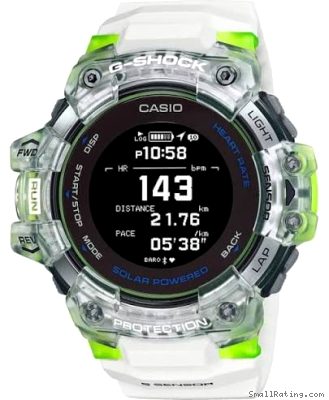
Casio G-Shock GBD-H1000

Casio G-Shock GBD-H1000

★★★★★ 4.0/5
$399

Chunky 63×55×20 mm resin case weighing about 101 g. Solar‑assisted charging delivers 12 months in timekeeping or 66 h with HR monitoring; topped via smartphone‑facing solar panel. Built‑in GPS, HR, altimeter, compass. Display is monochrome MIP LCD, very readable in sunlight. Best for those needing extreme battery life outdoors.

✅ Pros
  • Up to 12 months base battery life
  • Solar topping during GPS runs
  • Rugged G‑Shock construction
❌ Cons
  • Very large and heavy
  • Confusing interface
  • Sensor accuracy issues
4
Casio G-Shock GBD-H2000

Casio G-Shock GBD-H2000

★★★★★ 4.5/5
$399

Modern G‑Squad fitness watch, 59.6×52.6×19.4 mm, 63 g. Solar‑assisted charging plus USB. Includes GPS, heart‑rate, gyroscope, compass, altimeter/barometer, thermometer, sunrise/sunset, sleep analysis. Supports multiple sport modes. Slimmer and lighter than H1000.

✅ Pros
  • Lightweight 63 g
  • Six sensors plus GPS
  • Solar plus USB charging
❌ Cons
  • Needs USB for heavy GPS use
  • Still bulky for small wrists
3
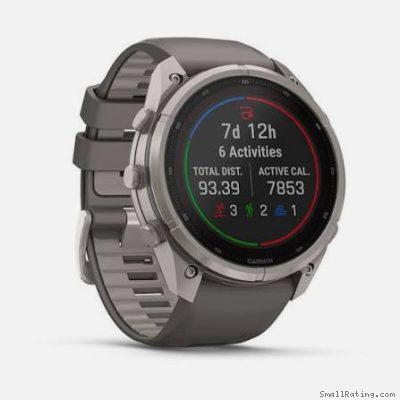
Garmin Fenix 9 Pro Solar

Garmin Fenix 9 Pro Solar

★★★★★ 4.8/5
$1,099

Premium GPS smartwatch, titanium case, available in 47 mm with MIP solar lens. Adds solar layer to extend Garmin's multisport battery life. Offers advanced mapping, navigation, training metrics. Base Pro price at 47 mm is $1,099; Solar same price.

✅ Pros
  • Top‑tier GPS and training features
  • Solar lens increases runtime
  • Titanium durability
❌ Cons
  • High price
  • Large case may not suit all wrists
2
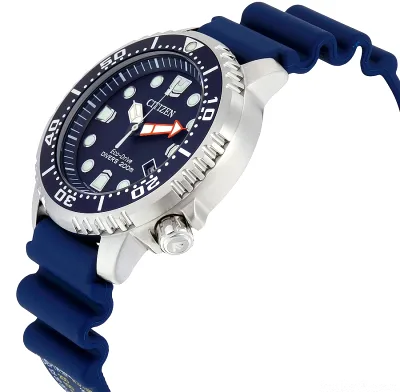
Citizen Promaster Diver BN0151-09L

Citizen Promaster Diver BN0151-09L

★★★★★ 4.3/5
$360

Classic ISO‑certified dive watch, 44 mm stainless steel, 200 m water resistance. Eco‑Drive solar‑powered quartz; current price deflated to about $360 from $450. Simple three‑hand and date function, luminous markers, durable and stylish for daily use.

✅ Pros
  • Never needs battery
  • ISO dive spec 200 m
  • Affordable stylish build
❌ Cons
  • No GPS or sensors
  • Quartz movement only
  • Larger size may not suit all
1
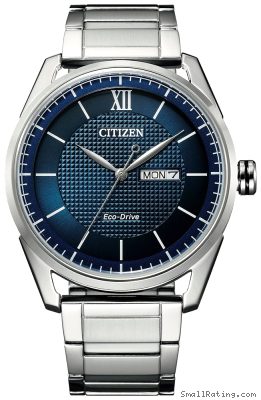
Citizen Eco‑Drive Classic Solar (Any models)

Citizen Eco‑Drive Classic Solar (Any models)

★★★★★ 4.1/5
$200

Minimalist Eco‑Drive model representing low‑maintenance solar watches; uses quartz accuracy and long‑running solar cell. Very affordable, with long lifespan-some examples have run over 12 years without service. Perfect for those seeking simplest solar.

✅ Pros
  • No battery replacement ever
  • Quartz accuracy
  • Very low cost
❌ Cons
  • No rugged or smart features
  • Basic display
  • Not sporty

📊 Comparison Table

Product Price Performance Features Value
Citizen Eco-Drive Classic Solar $200 Good Basic time only Excellent
Citizen Promaster Diver BN0151-09L $360 Reliable Dive-ready, solar Very High
Casio G-Shock GBD-H1000 $399 Solid endurance GPS, HR, solar High
Casio G-Shock GBD-H2000 $399 Better sensors 6 sensors, GPS, solar Very High
Garmin Fenix 9 Pro Solar $1,099 Top-tier Full multisport GPS solar High

❓ Frequently Asked Questions

How long does solar charging last on a watch?

Most solar watches run for months on a full charge. Models like G‑Shock GBD‑H1000 claim 12 months in timekeeping, while Garmin Fenix 9 Pro Solar adds several extra days to GPS battery life with solar.

Can I replace the battery in a solar watch?

Solar watches have rechargeable cells that generally last the life of the watch; Citizen Eco‑Drive models rarely require battery changes, and solar‑assisted smartwatches like Garmin and Casio also rely on long‑lasting internal batteries.

Are solar watches less accurate?

No. Solar watches use quartz or digital movements and offer comparable accuracy to battery‑powered models. Smart models may drift slightly with heavy sensor use but overall remain precise.

Do solar smartwatches need charging via cable?

For light use, solar alone may suffice. But intense features like GPS and heart rate tracking typically still require occasional USB or proprietary charging, as seen on GBD‑H2000 or Fenix.

Is solar charging viable indoors?

Yes. Solar cells charge slowly from artificial light. For example, Casio states 9 minutes in direct sun or 14 hours under 500 lux indoor light brings significant recharge.